This year, Palladium is participating in AIDS 2026, the world’s largest gathering focused on HIV and AIDS, at a pivotal moment for the global response. As countries and partners work to sustain progress amid shifting funding realities, the conference provides an important platform to shape the future of HIV programming—one that is more integrated with broader health services, more locally led, and less dependent on long-term external support.
Our team’s engagement reflects its commitment to working with governments, communities, donors, and implementing partners to advance practical approaches that protect HIV gains while strengthening health systems. It is also a timely opportunity to highlight the importance of linking HIV with global health security: investments in surveillance, laboratory systems, workforce capacity, data use, and resilient service delivery can support both sustained HIV outcomes and stronger preparedness for future public health threats.
Where to find us:
MONDAY, 27 JULY. 13:00-14:30
ROOM 205 l Satellite Session – Government-Led Transitions of Digital Health Systems: Lessons from Six Countries
Palladium is supporting a U.S. State Department-led satellite session on how countries can successfully transition donor-supported digital health systems to sustainable government ownership. The session brings together senior government leaders and digital health experts from the Democratic Republic of the Congo, Ethiopia, Côte d’Ivoire, Kenya, and Nigeria to share practical lessons from scaling, sustaining, and institutionalizing national health information systems (HIS) and electronic medical record (EMR) platforms.
Drawing on Data.FI’s seven years of collaboration with partner governments, panelists will explore a “transition from the start” approach that embeds sustainability, local ownership, and long-term governance throughout system design and implementation. Discussions will highlight country experiences strengthening interoperability, expanding multi-disease platforms, building digital health workforce capacity, mobilizing domestic financing, and leveraging open-source technologies to reduce fragmentation and donor dependence.
The session will distill cross-country insights into a practical framework for government stewardship of national digital health systems, demonstrating how country leadership can create resilient, data-driven health ecosystems that improve HIV and broader health outcomes for years to come.
Palladium’s participants include:
- Teddy Berihun
- Shreshth Mawandia
- Netsanet A. Nigussie
- Caitlin Showalter
- Mzwandile Vilakati
About AIDS 2026
For the U.S. Government, AIDS 2026 comes at an important inflection point as it advances a new global health strategy centered on stronger bilateral partnerships, greater country ownership, more efficient delivery models, and more resilient health systems that can sustain results over time. The conference offers a high-value forum to engage governments, multilateral actors, implementers, communities, and private sector leaders on how HIV programs can adapt to this transition while protecting progress, strengthening accountability, and aligning with broader priorities such as health security, domestic financing, and integrated service delivery.






































Projects and Partnerships
Palladium’s HIV portfolio spans global and country-level programs that help governments and partners strengthen the systems, services, and innovations needed to sustain progress toward epidemic control.
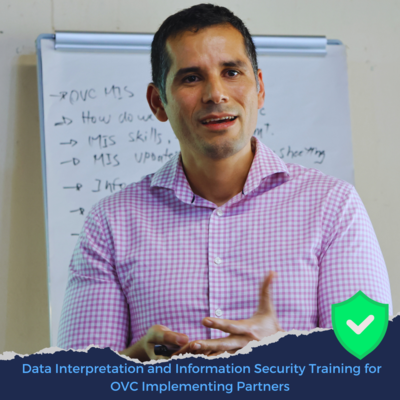
Through initiatives such as the U.S. Government-funded Data.FI and KenyaHMIS, Palladium supports countries to translate data into action, improve the continuity and quality of care, and build more integrated, client-centered models that connect prevention, treatment, laboratory, and community-based services.
Across Palladium’s Health Practice, our teams engage with governments, donors, implementers, and private sector partners—including those advancing medical technologies, diagnostics, digital architecture, and service innovations—to identify practical solutions that improve performance and durability at scale. This portfolio contributes not only to stronger HIV case finding, treatment retention, viral suppression, and service delivery, but also to the broader resilience of health systems by strengthening data use, governance, workforce capacity, and locally led approaches that can sustain gains over time.